58-Year-Old Retired Banking Executive Reveals the Budgeting System Helping Young Nigerian Women Stop Running Out of Money Before Payday

You check your account balance again. Not because you forgot the number. You just hoped it changed.
It didn't.
It's the 19th. Payday isn't until the 25th. And you already know — somewhere in your stomach, before you even open the app — exactly how this month ends.
"Where did it even go?"
You didn't buy anything crazy. No designer bags. No reckless flights. Just... life. Transport. Data. That small contribution for your cousin's traditional wedding. Lunch you "had" to buy because you left the house late again.
None of it felt like spending. It felt like surviving.
You've tried the apps. The colourful ones with the graphs that make you feel something for exactly four days before you stop opening them.
You've watched the YouTube videos at 1am, nodding along, taking notes you never look at again.
You've told yourself, "Next month, I'll be disciplined." You've said that more times than you'd like to admit.
And somewhere underneath all of it is a quiet, heavy feeling you don't say out loud — that maybe you're just not built for this. That other people have a "money gene" you missed.
You don't have a spending problem. You have never had a system built for a Nigerian salary, Nigerian family expectations, and Nigerian life.
Drop everything you are doing now and listen to every word I'm about to say.
This isn't a new idea dressed up in trendy language. It's the kind of money discipline our grandmothers practised without spreadsheets or apps — envelope by envelope, naira by naira, on instinct.
It's just been quietly passed down through people who actually understand how Nigerian salaries move: through one woman who spent over three decades inside the banking industry, watching brilliant, hardworking people earn well and still end every month with nothing left.
Hi, my name is Oyin.
First thing you should know about me is that I'm NOT a financial expert, an accountant, or a money coach. I'm just a 27-year-old project coordinator in Lagos who saw hell for a long time — quietly, behind a job title that made people assume I "had it together."

When I got my first corporate job, I genuinely believed earning a "real" salary would fix everything. No more counting coins for transport. No more borrowing notes from my roommate two weeks into the month.
It didn't fix anything. If anything, it made the shame worse — because now I had no excuse.
My salary would land, beautiful and round, and within two and a half weeks it would be... gone. Not stolen. Not spent on anything I could point to. Just gone, the way water disappears into sand.
I stopped opening my banking app. I'd see the notification pop up and just swipe it away. "I'll check later." Later never came.
It started costing me more than money. My friends would talk about their emergency funds, their first mutual fund, their "japa savings," and I'd laugh along and change the subject. I started avoiding hangouts that cost money — not because I was disciplined, but because I was scared.
Even my mum noticed. "Oyin, you're working now now, why do you still sound stressed about money?" I didn't have an answer that wouldn't make me cry.
The breaking point came on a Wednesday. My youngest cousin needed urgent help with school fees — a small amount, honestly. I didn't have it. Not because I hadn't earned it that month. Because I genuinely could not tell you where it had gone.
I called my godmother that night, half-crying, half-embarrassed to even be calling about something as "small" as money. She listened, and then she said something I still carry with me:
"Oyin, it's not that you don't have money. It's that your money doesn't have a job. Every kobo that enters your account and leaves without a name will always disappear like that."
I didn't fully understand it then. But I went looking for answers anyway.
I downloaded three different budgeting apps — all of them built around dollars, percentages, and spending categories that didn't reflect anything close to my reality. I abandoned each one within two weeks.
I tried a physical notebook budget, the kind influencers post pictures of. Beautiful for the first five days. Then I missed one entry, felt guilty, and stopped completely — the way most notebook habits die.
I tried the popular 50/30/20 rule. It assumed a kind of income stability and a kind of expense list that simply didn't match a Nigerian salary with family obligations baked into it. It collapsed by month two.
I tried "just saving whatever was left" at the end of the month. You already know how that one ends. There was never anything left, because nothing was protected first.
Eventually I stopped trying methods and just white-knuckled it — pure willpower. Which works, for about a week, until something unexpected comes up and the whole thing falls apart.
Then, in March, a friend forwarded me a flyer in our career WhatsApp group — a free personal finance webinar for young professionals. I almost ignored it. I'd "tried finance content" before. But something about the speaker's bio stopped my thumb: a retired banking executive, thirty years in the industry, known to her mentees simply as "Mama Budget."
That was my first time hearing Mrs. Abimbola Osho speak.
She didn't open with motivation. She opened with a question: "How many of you have a budgeting app you stopped using by the second week?" Almost every hand in that virtual room — including mine — went up, metaphorically, in the chat.
Then she said the thing that actually made me sit up straight:
"Forget the apps built for someone else's economy. Forget the notebooks you'll abandon when life gets busy. Real budgeting isn't about willpower. It's about building a system so simple that it survives your worst, busiest, most chaotic month — because that's the only kind of month that matters."
She then walked through the exact Excel framework she'd personally used and taught for decades — something she called the Salary Flow System™. Every naira given a job, before it even had the chance to disappear.
I'll be honest — I didn't believe it at first. It was almost insultingly simple. No complicated percentages. No fifteen categories. Just a clear, automated flow that took less than fifteen minutes a month to run.
I downloaded the tracker that same night, half-convinced it would join the graveyard of abandoned budgeting attempts on my laptop.
The first few days, nothing felt different. I filled in the tracker, half-heartedly, waiting for the usual boredom to creep in and make me quit.
It didn't come.
By the end of week one, something shifted. I opened my banking app — actually opened it, without flinching — and for the first time in years, I could explain every single transaction on the screen. Not guess. Explain.
That feeling is hard to describe if you haven't lived without it. A kind of quiet I hadn't felt about money in years.
By the end of the first month, it was no longer just a good feeling — it was proof. I had money left before payday. Actual money. And for the first time, I made an intentional savings contribution instead of an accidental, occasional one.
A close friend noticed before I even said anything. We were out one Saturday and she paused mid-sentence and said, "You're no longer stressing about money every weekend. What changed?"
A few weeks later, when I casually mentioned I'd already budgeted for an upcoming trip — actually budgeted, not "I'll figure it out somehow" — she laughed and said, "Who are you and what have you done with Oyin?"
I wasn't the only one. Two other women from that same webinar later shared in our follow-up group that they'd finally started their emergency funds — one of them for the first time in her working life. Another said she'd stopped dreading family money requests, because for the first time she had language and a plan for them, instead of guilt.
Since then, more and more people have been messaging me asking how I did it. I can't walk every single person through the framework one conversation at a time. So I put everything — the full system, the exact tracker, the step-by-step setup, what to avoid, how to know it's working — inside one simple guide.
Introducing
Save On Any Salary: The Budgeting Protocol For Young Nigerian Professionals
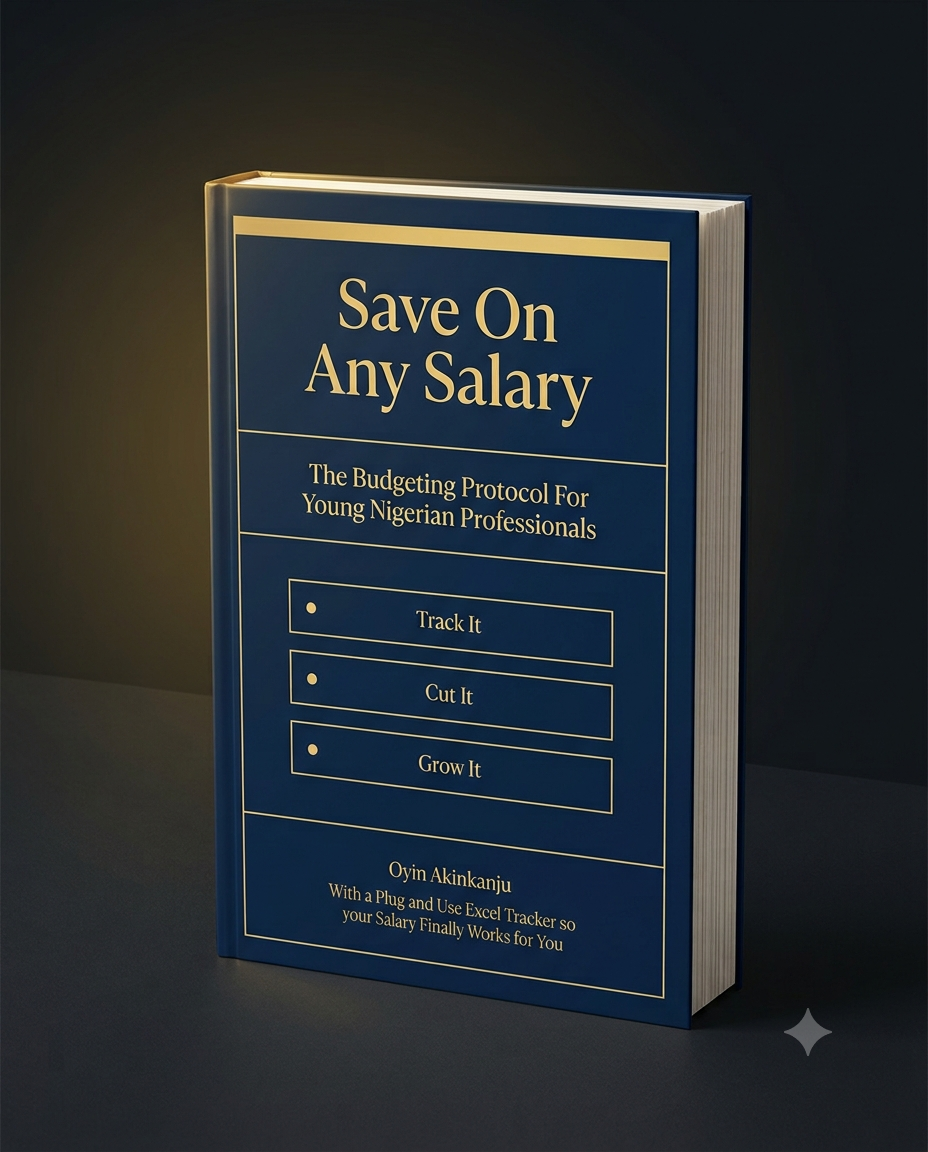
Inside this e-guide, you'll discover:
- Why your salary disappears every month — and why it genuinely isn't a discipline problem. — Pg. 4
- The 5-minute "Where Did My Money Go?" audit — find your real leaks before you build anything new. — Pg. 9
- The Salary Flow System™, explained step by step — the exact framework behind everything in this guide. — Pg. 15
- How to set up your Nigerian Salary Budget Tracker — built around how you actually get paid. — Pg. 23
- The 3-3-3 Emergency Fund Strategy — for the months that try to wreck everything. — Pg. 32
- How to handle family financial requests without guilt — scripts included. — Pg. 40
- The 15-minute Monthly Money Reset Ritual — the only "maintenance" this system ever needs. — Pg. 48
And the best part? You don't need to track every single transaction by hand, become a spreadsheet expert, or rely on raw willpower to make this work. It's the same simple system that worked for me, and has now worked for the women I've quietly shared it with.
Real Women. Real Testimonials.
Just So You Know... Putting This Guide Together Cost Me Over ₦312,500.
- Research into real Nigerian salary patterns and spending habits
- Hours spent with Mrs. Osho refining the Salary Flow System™ framework
- Professional design and layout of the page guide
- Building and testing the Excel tracker formulas across different income levels
I'm not going to charge you ₦312,500.
I won't even charge you ₦156,000.
Not even ₦78,000.
In fact, you won't even pay ₦24,800.
A fair price for this would be just ₦24,800.
₦24,800 ₦9,800This Discounted Offer Is ONLY For The First 45 Buyers — Hurry!
Instant access · Pay by card, bank transfer, or USSD
WAIT! I Have a FREE Gift For You...
If you're among the first 45 buyers, you'll get these bonuses alongside your guide. (Today only.)
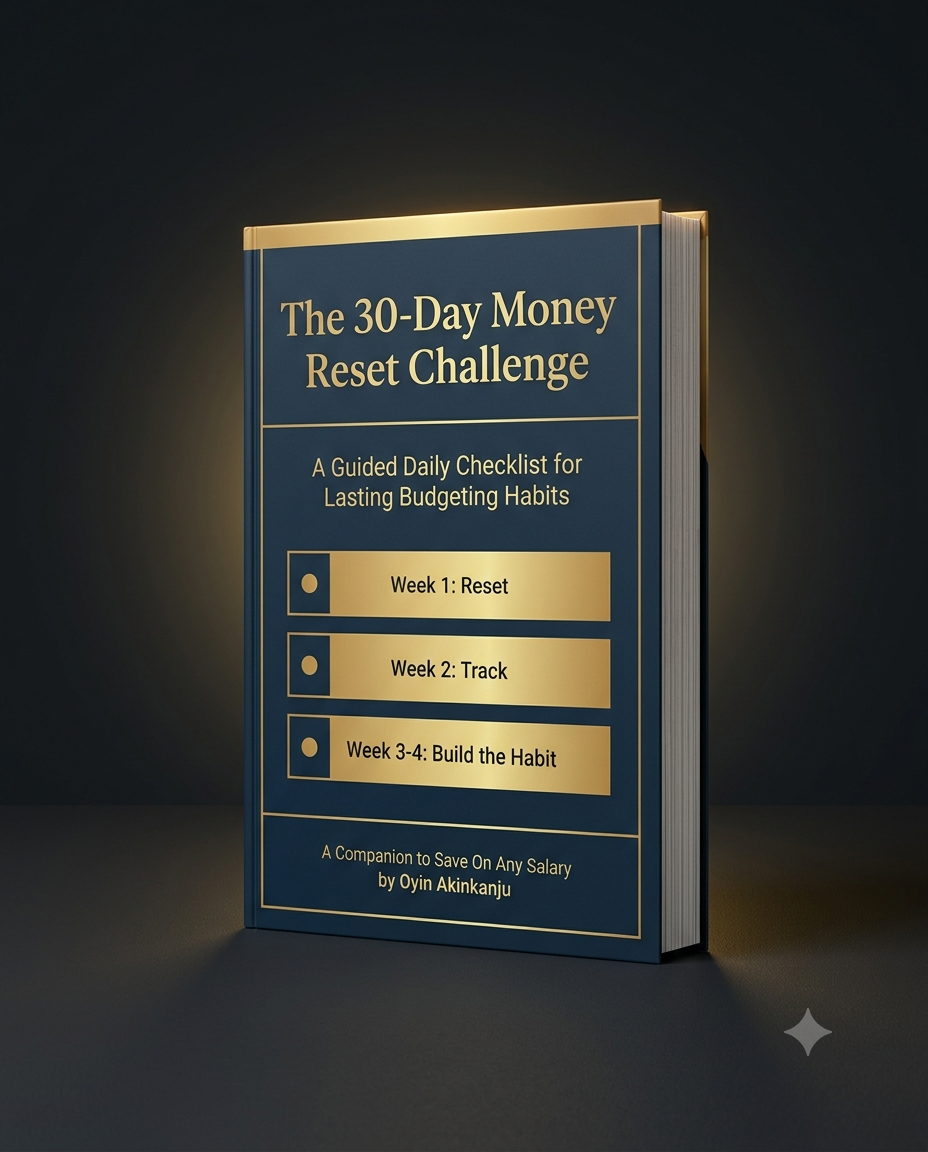
The 30-Day Money Reset Challenge
A guided daily checklist that helps you build lasting budgeting habits in just one month — so the system becomes a habit, not a one-time effort.
Worth ₦8,500 Free today
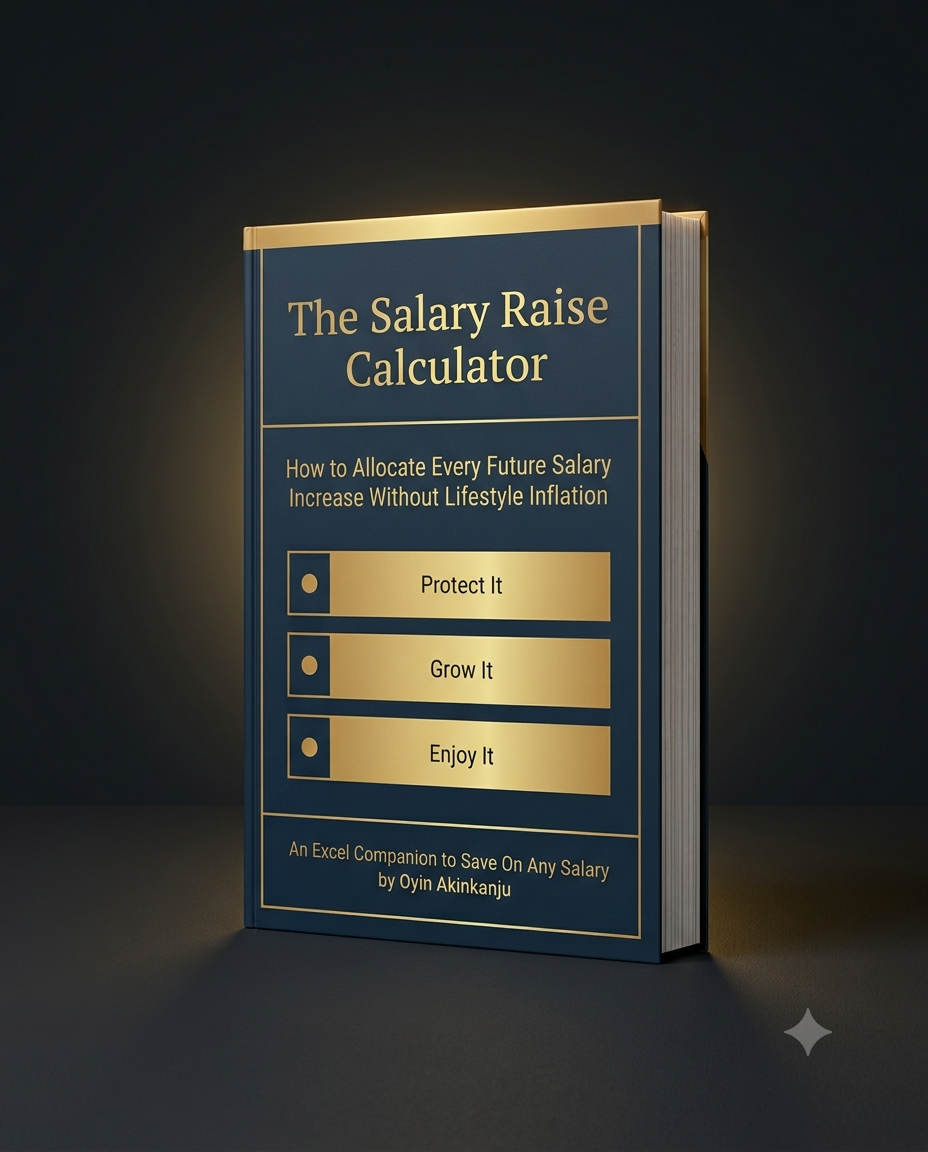
The Salary Raise Calculator
An Excel tool that shows exactly how to allocate every future salary increase — so the next raise builds your savings instead of disappearing into lifestyle inflation.
Worth ₦6,500 Free today
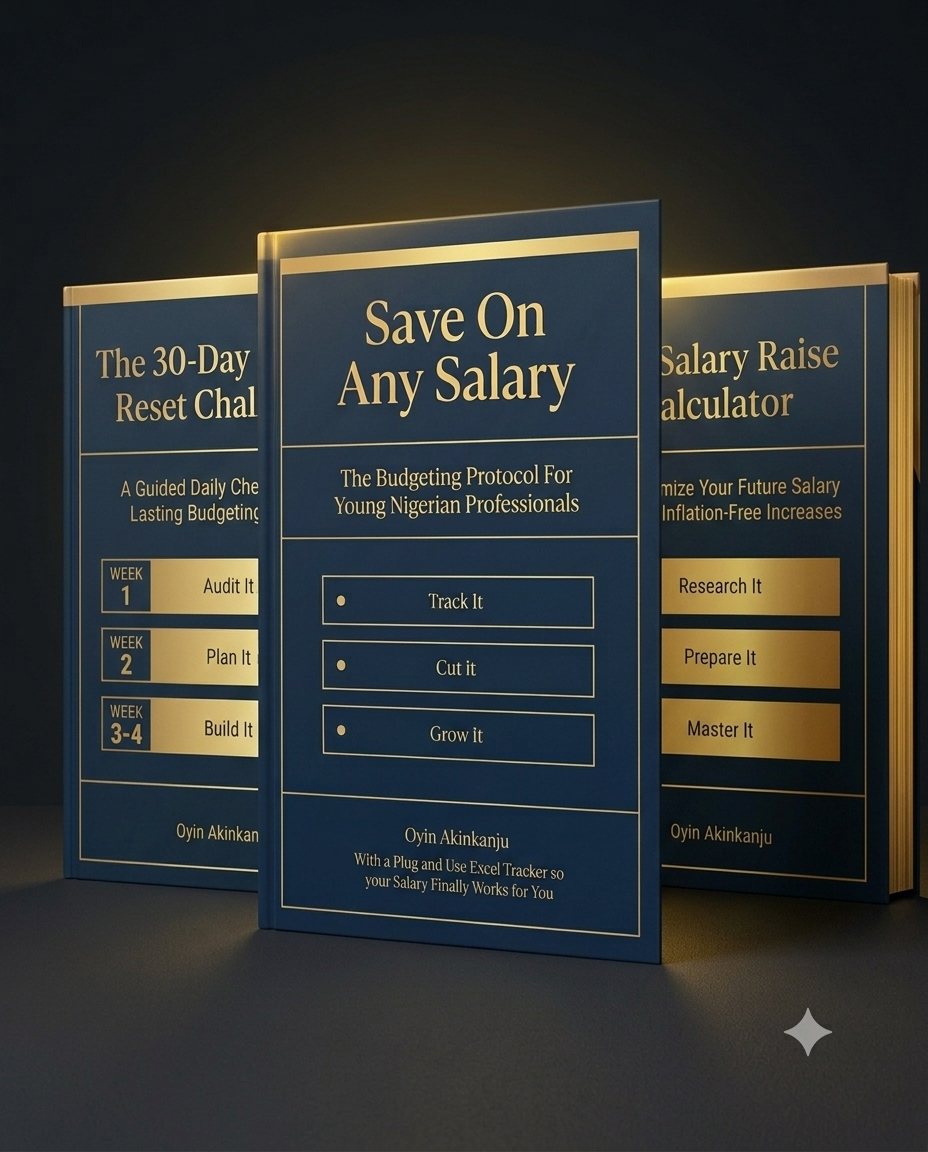
Right now
This offer is open to the first 45 buyers at this price.
Once we have our 45 buyers, the price moves to ₦24,800. You're not the only one looking at this page right now.
Still Feeling Unsure?
I totally understand. Which is why I'm making you a bold, risk-free promise:
30-Day Money-Back Guarantee. Use the Salary Flow System™ for 30 days. If you genuinely implement it and don't feel more confident and in control of your money, you'll receive a full refund. No long forms, no guilt-tripping. Just send an email.
More Stories From Our Readers
Option 1: Take action. Get Save On Any Salary. And regain your confidence with money — for the first time in a long time.
Option 2: Close this page and keep starting over every payday, hoping this month will somehow be different. Maybe God wanted you to see this. Who knows?
The clock is ticking.
₦9,800 today · First 45 buyers only · 30-day money-back guarantee